
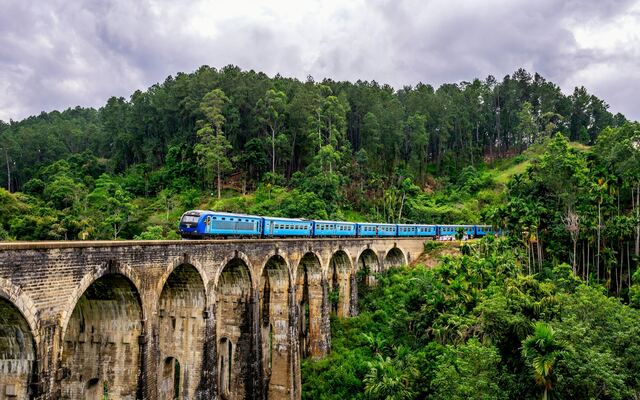
What is the network coverage like in Sri Lanka?
In major Sri Lankan cities such as Colombo, Kandy, and Galle, 4G network coverage is ample, ensuring smooth navigation, internet access, and communication with friends and family.
However, if you plan to visit tea plantations or wildlife reserves in the central highlands, be aware that the signal may be weaker. These areas may experience intermittent network connectivity, affecting your internet experience.
How to choose the right eSIM plan for your Sri Lanka trip?
Currently, all eSIM plans available for Sri Lanka are based on total data usage, with no daily quota options. This plan suits travellers whose itineraries are mainly in cities or areas with good network coverage, as it allows for flexible daily data allocation.
If your itinerary includes the central highlands or if you will be spending extended periods in remote areas, it is advisable to choose a plan with a larger total data allowance. This way, you can maximise usage when the signal is strong, avoiding the risk of running out of data midway.
Which parts of Sri Lanka should you anticipate having no signal?
- Visiting tea plantations in the central highlands → These areas have weaker signals, so it is recommended to download offline maps and important information in advance.
- Wildlife Reserve Activities → Network coverage within the reserve is limited, so remember to arrange all network-related matters before departure.
- Long-Distance Travel Between Cities → While major highways have ample 4G coverage, some sections may experience unstable signals, so it's advisable to prepare offline entertainment content.
Which network does our Sri Lanka eSIM use? What is the coverage like?
Our Sri Lanka eSIM uses the Hutch network, which has good coverage in major cities like Colombo, Kandy, and Galle, as well as on the main roads connecting these cities.
As for the tea plantations and wildlife reserves in the central highlands, although there are some dead zones in Hutch network coverage, the network performance remains stable in areas with signal coverage. It is recommended that travellers download offline maps and important information in advance before visiting these areas, just in case.
Related destinations
More guides
eSIM, Pocket Wi-Fi, or Carrier Roaming? How to Choose Your Travel Internet
There are three ways to get online abroad: buy a travel eSIM, rent a pocket Wi-Fi, or turn on roaming with your home carrier. This guide compares the cost structure, convenience, and risks of each, and tells you which one fits which kind of traveller.
Daily Allowance vs Total Data Pool: Which Type of SIM Suits Your Trip
“1GB a day” and “10GB over 7 days” look similar on paper, but they work very differently in practice. This guide breaks down the two allowance types, which trip shapes each one suits, and how to roughly estimate how much data you'll need.
What “Unlimited Data” SIM Cards Actually Mean
Almost every travel SIM plan labelled “unlimited” has a full-speed cap, after which it throttles down and keeps going. This guide shows you how to find that threshold in the plan details, and whether the throttled speed is actually usable.